
Jungle Strike Gameplay
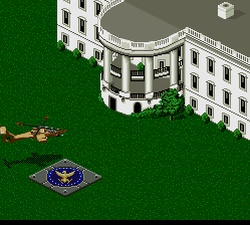
You flip to the map, trace a route with your thumb, and an invisible timer starts ticking in the back of your head: fuel is the only clock that never lies. Jungle Strike is exactly that kind of ride, where every round matters and maneuver beats muscle. A heartbeat later the chopper, heavy and full of inertia, peels off the ground. From above it’s all laid out in miniature: knolls, rivers, shacks, bases. Jungle Strike doesn’t ask if you’re ready; it drops you straight into the fray, and you learn its rhythm on the fly—short runs, sharp breaks, tight altitude control, and the eternal hunt for a fuel drum or a crate of rockets.
The feel of flight
No noise for the sake of noise. The game’s pulse is a duel with space. The top-down view deceives: it looks simple, but your hands are always busy. You steal the right angle to slip past tracer fire, skim the river in a nap-of-the-earth pass, tuck behind a tiny island, kick into a dive and, feeling the vibration through your fingers, hose down an AA gun. One beat and you jink away: a nasty SAM whooshes by—you heard it more than you saw it. Then a pilot’s little euphoria: a squat supply square flares on the radar. It pulls you in like an oasis.
The helicopter isn’t on rails. It feels alive: it gets heavier with sloppy inputs, the engine pants under load, and there’s a hint of slide through the turn. Big rocket volley, clipped burst from the minigun, a snap of speed—then back to the map, because in Jungle Strike there’s rarely just one objective. Recon, suppression, rescue, escort—they stack like storm clouds, and you’re constantly deciding what’s first on the docket.
Missions and pacing
Objectives play out like multi-step ops. Maybe you need to knock out radar nodes, but they’re nestled inside a hard nut of turrets and the approaches are mined. First you pull the teeth: lure out lone crews, trim the AA network, hide in the folds of the terrain, and only then slip into the center to grind the target to dust. The reward pops right away—a couple of rocket crates and a repair. The tempo flips instantly: a distress ping from an allied convoy, and now you’re the shield, circling the road, plucking tanks and jeeps from the brush. Out of the trees a hovercraft noses in—friendly, waiting for a special-ops drop. You set the chopper down soft, hook the team, and for a breath the world just hangs.
The sweetest hits are the curveballs. Day slides into dusk, rain whispers on the metal, the camera is still top-down yet it feels like a real night raid. Somewhere an emergency beacon blinks—hostages. You scoop them up at the last second, running on fumes, and it clicks that every rescued little figure isn’t just “points”; it’s more time to stay aloft. In Jungle Strike the rewards aren’t numbers—they’re extra chances to live.
Vehicles and tempo shifts
The game doesn’t lock you in the chopper. At some point it hands you other rides, and the rhythm flips on a dime. A lightweight bike for threading narrow trails: you pause before the bend, pick your line, exhale, and punch into the wind. A tough patrol boat is a different song—course and attack angle matter, you feel the water’s inertia and work targets on the way out. And when you manage to slip into a stealth jet, the world below redraws itself: speed stretches space, and every pass is a jab of adrenaline. Whatever you’re handed, Jungle Strike keeps one rule: protect your resources. Fuel, armor, ammo—that’s your tactics distilled.
Sometimes the map whispers its tricks. A frontal push looks obvious, but the layout suggests otherwise: come up the river, put the sun in the enemy’s eyes, snag the safe with the documents, and only then smash the generator. When the target blossoms, the headset noise falls away and for a second it’s just you and the sky. Jungle Strike loves those quiet beats—only to click the timer again and send you to the next hot spot.
Combat and attention to detail
Shooting here isn’t “hold the button and win.” You’re always doing the math: AA is worth a missile, a jeep gets the gun, armor takes short bursts and a sidestep. Enemies react—fall back, duck behind structures, stall for reinforcements. You slip into being the commander of your own tiny war. Against the big, bombastic backdrop it’s the details that sing: set the chopper down between palms without clipping the rotors; trade a spare rocket crate for fuel if a long ferry leg is coming; pick up a downed pilot so he doesn’t vanish for nothing. This is that arcade-sim sweet spot where the thrill comes not from stats but from the right call at the right second.
Nothing beats a clean one-on-one when your armor’s in the red and you’ve got one last salvo. You listen to the map like a heartbeat, trace a safe arc, let the enemy’s fire hiss past, then answer with something short and surgical. Those beats stick: fingers finding the exact flick on the stick, the screen freezing for a blink in the blast, the urge to exhale—but you can’t yet. That low fuel pulls you onward, toward the blessed jerrycan.
Nostalgia that lives in the gameplay
In Jungle Strike, nostalgia isn’t a screenshot—it’s a state of mind. That discipline: task first, heroics later. That quiet joy of “we had nothing left—and still made it.” Even the pause on the map feels like a slow drag before the next push. You’re not comparing or min-maxing—you just fly. Somewhere between the humid tropical air, the little HUD icons, and the endless scrounge for supply crates, you remember why we keep coming back. Jungle Strike is played with heart and hands, and every new run is a small personal story where you relearn being precise, calm, and bold.
And when a level finally clicks, when the missions line up clean, what lingers is the aftertaste we plug the cartridge back in for. Not because we’re chasing “records,” but because this game knows how to hold a player’s breath. Every time you boot up Jungle Strike you catch yourself thinking: there it is—the rhythm, the true top-down view where the sky is your friend, but only if you know how to hear it whisper.